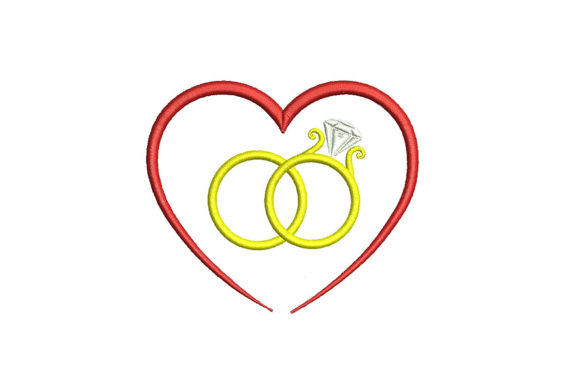
Wedding Ring and Heart: A Designer’s Real-World Review
As an embroidery designer who has spent years digitizing patterns and reviewing countless machine embroidery design files, I have developed a keen eye for what works in the hoop versus what merely looks good on a screen. When I first loaded the Wedding Ring and Heart file into my software, my immediate reaction was one of cautious optimism. This is not just another generic heart motif; it carries a specific narrative weight that demands careful handling. For those of us running small craft businesses or creating personalized gifts, understanding the practical application of such a design is crucial before we commit to stitching it on a client’s expensive garment.
First Impressions and Visual Mood
The visual personality of Wedding Ring and Heart is inherently romantic yet structured. The interplay between the organic curve of the heart and the geometric precision of the ring creates a balanced composition. In terms of mood, it evokes commitment and warmth, making it a natural fit for the Wedding Designs category. However, its versatility extends beyond bridal wear. The layout suggests a design that relies heavily on clean lines and clear separation between elements. As a reviewer, I look for designs that maintain their integrity across different scales. This particular embroidery file appears to prioritize clarity, which is essential when working with smaller hoop sizes or intricate details.
For Etsy sellers and handmade shop owners, the aesthetic appeal here is strong. It feels timeless rather than trendy, which means it has a longer shelf life as a digital product or finished item. The design does not scream for attention with excessive complexity; instead, it invites closer inspection. This subtlety is often what drives buyer engagement in boutique branding, where customers appreciate understated elegance over loud graphics.
Real-World Application: The Custom Tote Bag Test
To truly evaluate this design, I imagined a real-life scenario: preparing a custom embroidered tote bag for a bridal shower gift. Tote bags are popular items for small shop products, but they present unique challenges due to the fabric texture and potential for stretching. I envisioned using a medium-weight canvas with a dense cotton stabilizer.
In this context, Wedding Ring and Heart performs well because the central motif is compact enough to sit neatly on a pocket or the corner of the bag without overwhelming the material. If you are creating a tote bag design for commercial sale, the simplicity of this pattern allows for quick production times, which is vital for maintaining profit margins. The design’s structure suggests it would hold up well against the rougher weave of canvas, provided the stitch density is appropriate. I would recommend testing a sample piece to ensure the rings do not appear too sparse or too cluttered, depending on the thread thickness used.
Versatility Across Product Lines
Beyond tote bags, this design shines in several other areas. For sweatshirt embroidery, the heart and ring motif can be placed on the left chest for a subtle, professional look or centered on the back for a bolder statement. When working with fleece or thick knit fabrics, the design’s lines must remain distinct. I advise using a cut-away stabilizer to prevent puckering, which can distort the circular shape of the ring and ruin the symmetry of the heart.
For baby items, such as onesies or burp cloths, the design offers a sweet, sentimental touch. However, caution is required. Baby skin is sensitive, and the back of the embroidery must be soft. If the stitch density is high, consider using a soft tear-away stabilizer and trimming excess threads meticulously. This transforms a standard baby embroidery project into a high-quality personalized gift that parents will treasure.
Another excellent application is in embroidered patch creation. Patches are trending among creative entrepreneurs and apparel decorators. The contained nature of Wedding Ring and Heart makes it ideal for satin stitch borders that define the patch edge. Whether applied to denim jackets, caps, or backpacks, the design maintains its recognizability even at smaller scales.
Technical Considerations and Potential Pitfalls
While the design is visually appealing, there are areas where careful attention is needed. One major concern with any design featuring thin lines, such as the band of a wedding ring, is stitch coverage on dark fabrics. If you are stitching on black or navy material, ensure you use a high-contrast thread color or consider a underlay stitch strategy that builds a solid foundation. Without proper planning, the ring might disappear into the background, losing its symbolic impact.
Additionally, curved surfaces like caps present a challenge. The distortion caused by the curvature can stretch the heart shape, making it look oval rather than round. To mitigate this, I recommend using a strong stabilizer and possibly adjusting the pull compensation in your digitizing software if you have the capability. For those buying pre-digitized files, always check the recommended hoop size and ensure it matches your machine’s capabilities.
Textured fabrics also require scrutiny. If you are working with terry cloth towels for holiday embroidery or kitchen decor, the loops of the fabric can obscure fine details. In such cases, a water-soluble topping can help keep the stitches on the surface, ensuring the satin stitch work remains smooth and the fill stitch areas look uniform.
Enhancing Brand Value and Customer Trust
From a business perspective, the quality of your embroidery directly impacts customer trust. A well-executed Wedding Ring and Heart design signals professionalism. It shows that you care about detail and presentation. For digital product sellers, providing high-quality printable mockup images that show the design on various fabrics can significantly boost sales. Buyers want to see how the design assets will look in real life.
When offering this as part of a custom apparel service, be transparent about the limitations. Explain to clients why certain fabric choices work better than others. This educational approach builds rapport and positions you as an expert, not just a vendor. It also reduces the likelihood of returns or dissatisfaction due to unrealistic expectations.
Practical Designer Notes for Success
Before committing to a full production run, always test the design on scrap fabric similar to your final material. Check the thread color contrast to ensure the ring stands out against the heart. Review the stitch density to avoid unnecessary bulk, especially if the item will be worn close to the skin. Confirm the hoop size requirements and ensure your machine can handle the file format.
Inspect small details closely. Are there any jump stitches that need trimming? Is the connection between the heart and ring secure? Test the design in black and white mockups to verify that the shape is recognizable even without color. Compare how it looks on light versus dark fabric backgrounds to determine if adjustments are needed.
Finally, always confirm licensing terms. If you plan to sell finished items or use this as a commercial embroidery asset, ensure you have the right to do so. Respecting intellectual property is fundamental to maintaining a reputable craft business. By taking these steps, you ensure that Wedding Ring and Heart becomes a valuable addition to your portfolio, enhancing both your creative output and your bottom line.