Chimpanzee Doing Dishes: A Designer’s Review
As an embroidery designer who has spent years digitizing files for small businesses, I have learned that the difference between a cute novelty and a profitable brand asset lies in execution. When I first loaded the Chimpanzee Doing Dishes machine embroidery design into my software, my immediate reaction was one of cautious optimism. The concept is undeniably charming, blending whimsy with domestic routine. However, for boutique owners, Etsy sellers, and apparel decorators, charm alone does not sell merchandise. We need versatility, clarity, and professional finish. This review evaluates whether this digital embroidery file can truly serve as a cornerstone for your branded patch collections, staff uniforms, or handmade product lines.
Visual Personality and First Impressions
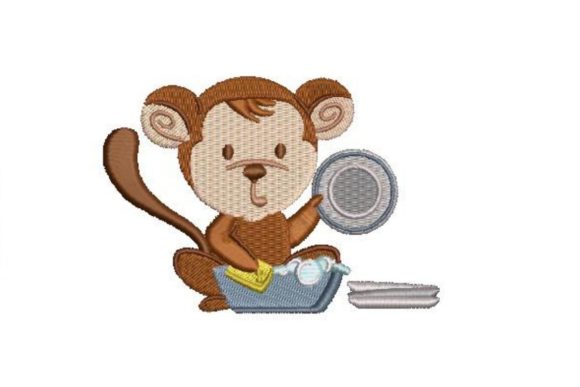
The visual personality of Chimpanzee Doing Dishes leans heavily into the playful and friendly spectrum. It is not attempting to be elegant or minimalist; rather, it embraces a rustic, handmade aesthetic that resonates well with creative studios, bakeries, and local cafes. For brands that want to project approachability and warmth, this design hits the mark. The imagery suggests a narrative—keeping you company while tackling chores—which creates an emotional connection with the customer. In the context of Cleaning and home care branding, this adds a layer of humor and relatability that sterile corporate logos often lack.
However, from a technical standpoint, "cute" can sometimes translate to "cluttered" if the stitch density is too high or the outlines are too thin. My initial inspection focused on the balance between the character details and the negative space. A successful commercial embroidery project requires that the design remains legible even when scaled down. If the chimpanzee’s features merge into a blob of thread at smaller sizes, the design fails its primary function: brand recognition.
Real-World Business Applications
Where does this design actually work in a commercial setting? I tested the concept across several common small business merch categories. Here is how Chimpanzee Doing Dishes performs in real-world scenarios:
- Apron Embroidery: This is the most natural fit. For bakery staff, florists, or pottery instructors, an apron featuring this design adds personality to the uniform. It transforms a functional garment into a conversation starter.
- Embroidered Patches: As a standalone patch, this design could be sold as a fun accessory for tote bags or denim jackets. Patches allow customers to buy into the brand identity without committing to a full garment.
- Tote Bag Design: Canvas totes are a staple for handmade product sellers. Placing this design on a neutral-colored bag creates a high-contrast, eye-catching item that promotes brand visibility in public spaces.
- Kitchen Decor and Towels: Since the description mentions kitchen decor, this is ideal for hospitality businesses. Hotels, bed-and-breakfasts, or rental property hosts can use these embroidered towels to add a unique, memorable touch to their guest experience.
For custom apparel shops, this design works best as a chest logo accent or a sleeve detail rather than a massive back print. Its scale seems suited for intimate, personal items rather than bold streetwear statements.
Technical Constraints and Careful Placement
While the artistic merit is strong, we must address the technical limitations. Not every surface is suitable for this level of detail. If you are considering cap embroidery, proceed with caution. Curved surfaces distort designs, and if the chimpanzee’s facial features are intricate, they may pucker or lose definition on a structured dad hat. Always test on a similar curved surface before running a full production batch.
Additionally, consider the fabric texture. On rough canvas or heavy denim, fine details can get lost. On smooth performance fabrics, high stitch density might cause pulling. I recommend reviewing the thread colors carefully. If the design relies on subtle shading, ensure your thread palette offers enough contrast against dark uniforms. A black chimpanzee on a navy shirt will vanish, ruining the visual consistency of your brand identity.
Small patch sizes also pose a risk. If you shrink the hoop size too much, the "doing dishes" elements—like bubbles or plates—may become indistinguishable specks. Maintain a minimum size where the main subject remains clear. If the design includes tiny lettering, verify that it remains readable at your intended scale. Illegible text looks unprofessional and undermines customer trust.
Impact on Brand Identity and Customer Trust
Using a distinct character like Chimpanzee Doing Dishes helps solidify brand identity. It moves your business away from generic clipart and toward a proprietary visual asset. When customers see this specific chimpanzee on your packaging, your social media, and your physical products, it builds recognition. This visual consistency signals professionalism and attention to detail.
For handmade brands, this design enhances the perceived value of the finished product. It shows that you have invested in quality design assets rather than using free, overused graphics. This effort translates to higher buyer engagement. Customers are more likely to share photos of unique, whimsical merchandise on social media, providing you with free marketing through user-generated content.
Practical Designer Notes for Production
Before you commit to a large run of commercial embroidery, follow these practical steps to ensure quality control:
- Test in Black and White: Convert the design to monochrome in your software. If the shapes lose definition without color, the stitch structure needs adjustment.
- Check Hoop Size Compatibility: Confirm that the design fits within your standard hoop size. Do not assume it fits all frames; check the dimensions explicitly.
- Select the Right Stabilizer: For aprons and towels, which undergo frequent washing, use a cut-away stabilizer to prevent distortion over time. For patches, a tear-away might suffice during creation, but ensure the edges are finished well.
- Create a Printable Mockup: Before stitching, place the design on a digital mockup of your target product. This helps you visualize spacing and proportion relative to seams and pockets.
- Verify Commercial Licensing: The product description notes it comes with multiple formats, but always confirm the license terms. Ensure you have the right to use the digital embroidery file for selling physical goods.
- Inspect Stitch Density: High density can make items stiff and uncomfortable. Check if the design allows for breathable stitching, especially for wearable items like caps or shirts.
In conclusion, Chimpanzee Doing Dishes is a strong contender for businesses looking to inject personality into their merchandise. It excels in contexts that value warmth and humor, such as cafes, boutiques, and home goods brands. However, success depends on rigorous testing. By respecting the limits of fabric texture, hoop size, and stitch density, you can transform this adorable embroidery into a powerful tool for brand building. Treat it not just as a decoration, but as a strategic asset in your small business merch toolkit.